
Close
Menu
  1. Home /
  2. Our work /
  3. Defib Warehouse – organic growth
Defib Warehouse

Building organic growth to improve commercial efficiency

  • SEO
  • Conversion rate optimisation
  • 1,850
    organic clicks to the core page rose by

The Diagnosis

Rising paid costs and a slow site were holding back organic growth

Defib Warehouse operates in a high-intent ecommerce category where buyers often search with urgency and purpose. Paid search had been carrying too much of the commercial load, while CPCs in the category continued to rise year on year. A static paid budget was buying less traffic, so revenue growth increasingly depended on spend growth.

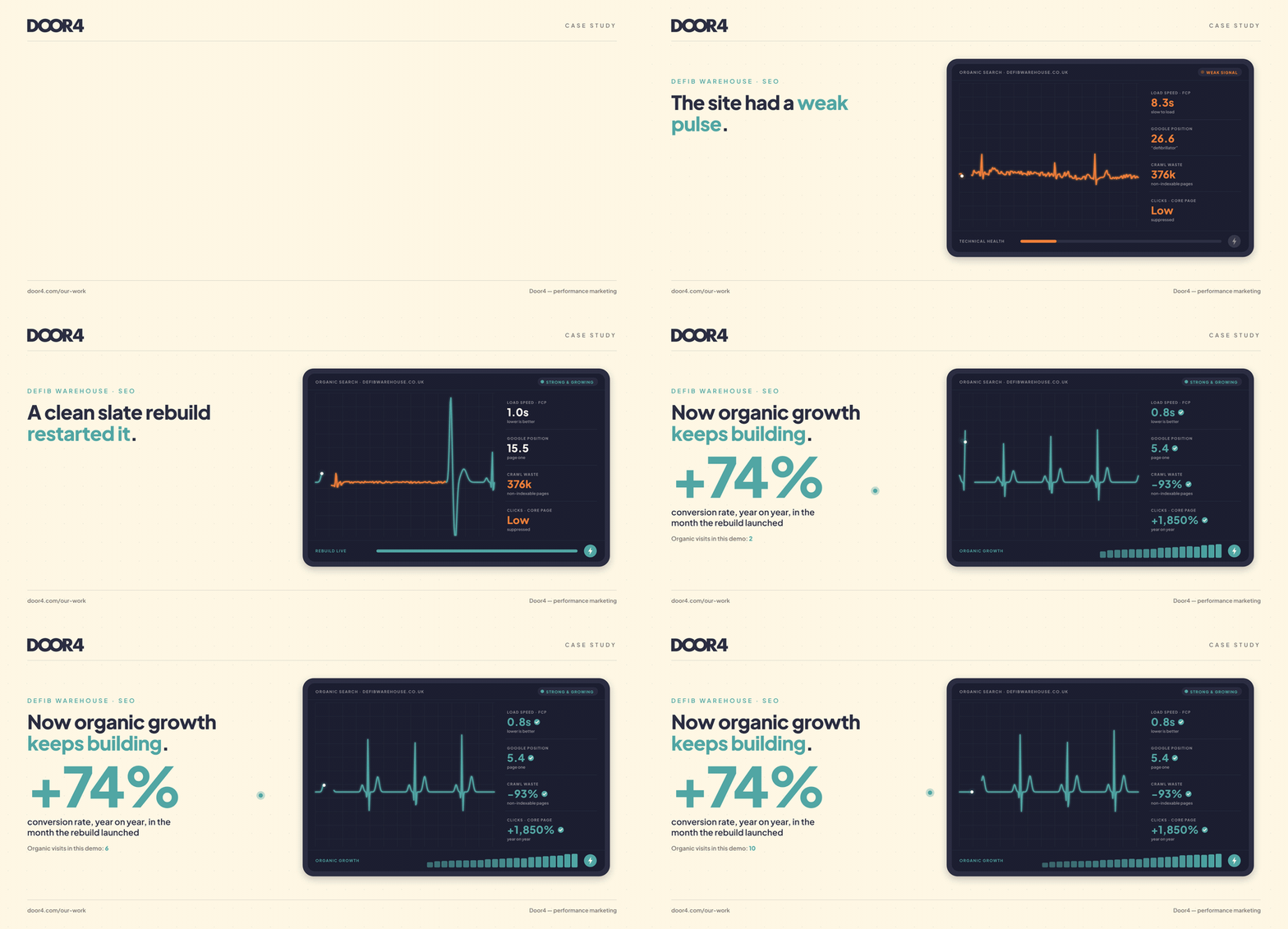
The team already had SEO activity underway, including content production, on-page optimisation and technical fixes. The problem was the site itself. Core pages were slow to load and difficult for search engines to read. The main category page had a First Contentful Paint of 8.3 seconds and a speed index of 11.3 seconds. In plain terms, users were waiting too long, and Google could not properly understand the content.

Our objective was to build a technical and content foundation that could grow organic traffic, improve conversion performance and reduce reliance on increasingly expensive paid clicks.
 

The Approach

We fixed the foundation first, then built a repeatable organic growth system

Door4’s strategy started with diagnosis rather than more activity. The data showed that the ceiling was technical. Existing SEO work had value, but the site could not render it properly. Adding more content before fixing the platform would have created more waste.

We prioritised a clean-slate rebuild of the site theme and stylesheet, focused on speed, crawlability, indexability and SEO readability. This gave search engines a site they could load, crawl and evaluate properly.

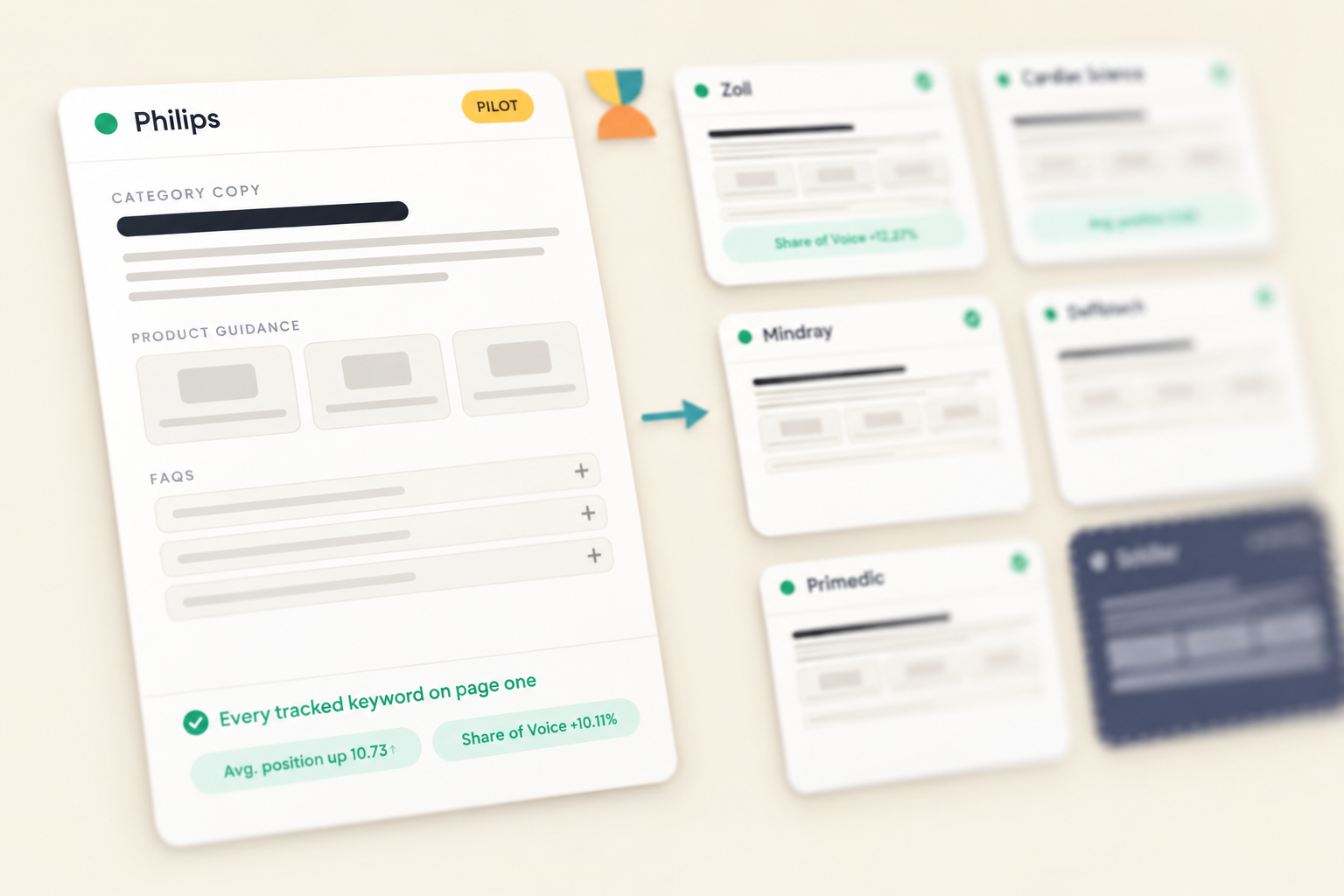
Once the foundation improved, the SEO strategy moved into three connected workstreams. First, we allowed existing category content to perform as intended. Second, we created a repeatable manufacturer-page content template to capture brand-intent searches organically. Third, we expanded content depth around high-value buying themes and use cases.

The KPI framework kept the work commercially focused. We tracked average position, Share of Voice, Core Web Vitals, clicks, impressions, conversion rate, paid dependency and blended ROI

The Execution

A cross-channel delivery model turned technical improvements into commercial gains

This project worked because it was treated as a shared performance initiative rather than a single-channel SEO task. Development rebuilt the technical foundation and completed detailed QA before launch. The client team supported testing across transactional integrations, including order management, accounting and email systems, which made their involvement essential to a safe release.

SEO ran speed analysis, crawl audits and technical checks after launch to confirm the improvements had landed. CRO paused part of its testing programme during the build so resources could support the rebuild, with the expectation that future tests would be more reliable on a faster site. Paid media also fed into the thinking, because stronger landing page relevance and page speed support Quality Scores, ad rank and CPC efficiency.

After launch, Door4 monitored performance closely through a period of expected turbulence and repeated Google Core Updates. We used 90-day rolling ranking views and Share of Voice to separate genuine movement from algorithm noise, then continued the content rollout manufacturer by manufacturer.


The Success Criteria

Success meant better rankings, stronger efficiency and less pressure on paid spend

The success measures were practical and commercial. We wanted the site to load faster, give Google clearer access to priority pages, move high-value terms onto page one, grow organic clicks and improve blended ROI.

Technical success was measured through First Contentful Paint, speed index, Core Web Vitals, URL health, indexability and crawl budget waste. Organic success was measured through average position, Share of Voice, clicks, impressions and CTR. We measured commercial success through conversion rate, orders, revenue growth, paid dependency, and blended ROI.

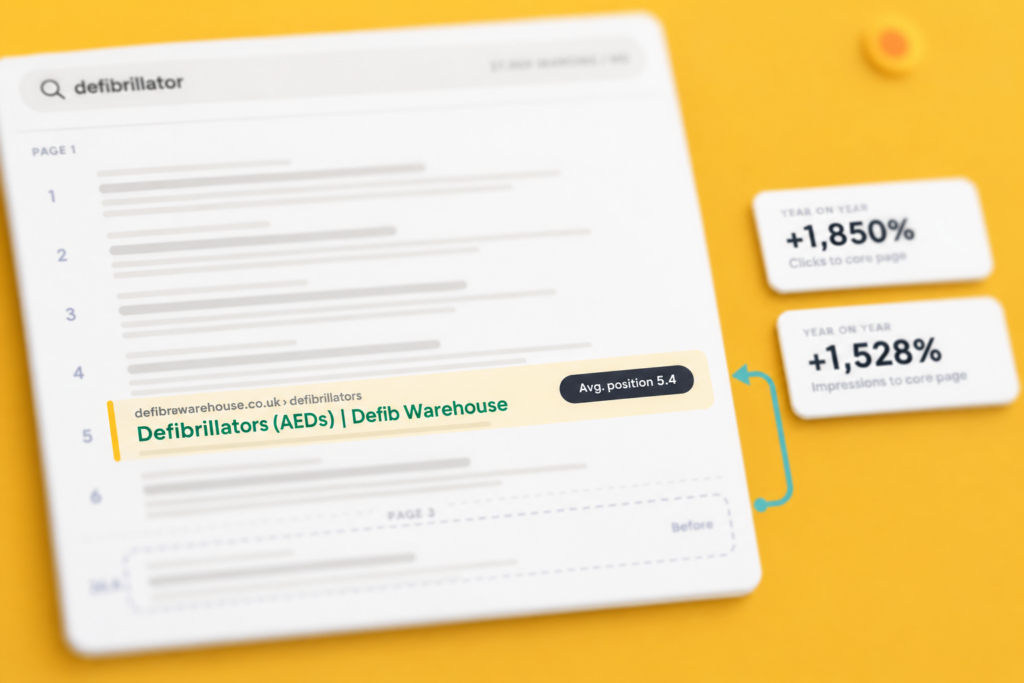
The standout measures were: FCP fell from 8.3 seconds to 0.8 seconds, speed index dropped from 11.3 to 1.9 seconds, the core category term reached page one, organic clicks to the core page rose 1,850%, and blended ROI reached 1,118%.

Client outcomes & beyond

Defib Warehouse now has an organic growth engine that compounds over time

The work shifted the economics of the account. Organic visibility improved across core category and manufacturer-intent searches, giving Defib Warehouse more traffic without a variable cost per click. That matters in a category where paid search costs continue to rise.

The technical gains created a permanent baseline. The site is faster, easier to crawl and better able to support future SEO, CRO and paid media activity. The manufacturer-page template also gives the client a repeatable way to build authority across priority product areas without reinventing the structure each time.

The commercial impact is visible in the blended numbers. Orders increased 24% year on year between April and July. Net sales rose 48% year on year in July. Blended ROI improved while spend increased, showing that organic growth was carrying more of the load.

The key takeaway is simple: performance marketing works harder when the site underneath it is technically fit for growth.

Does this kind of success work for you?

If you'd like to work with a performance marketing agency that will help you exceed your commercial goals, we can start on it right away. Get in touch.

Proud to work with