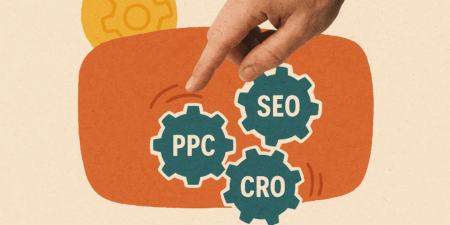
Marketing budgets are under pressure. Growth targets aren’t going away. The instinct is to spend more.
It’s a reasonable instinct. More spend often does produce a short-term lift, particularly where investment has been too low to make an impact. But it has limits, and those limits arrive faster than most businesses expect.
 “Increases in marketing spend can often have the desired short-term impact,” says William Sharp, Account Manager at Door4, “but if you’re not addressing other elements in the equation, this can very quickly become a game of diminishing returns and wasted spend when you hit a ceiling.”
That ceiling is real. And it’s getting lower.
The paid search problem
Google CPCs have risen year on year, consistently, with no sign of reversing. Third-party research puts the average increase at around 20% annually, meaning brands are paying more simply to stand still. Impression share is harder to hold as larger competitors take significant chunks and smaller, agile rivals chip away at the edges.
The result: budget uplifts no longer generate incremental growth, they maintain visibility. You’re running faster to stay in the same place.
This doesn’t mean paid search has lost its value. It remains the backbone of performance for many businesses. But it cannot be the only lever in play.
Two things that matter as much as spend
Alongside budget, two factors determine whether marketing investment actually compounds.
The first is brand. Top-tier brands spend less to acquire customers because they’re already known quantities. Recognition reduces friction at every stage of the funnel. Building it isn’t an overnight fix, but it snowballs continuously once started, and the earlier you begin, the more efficiently your spend works over time.
The second is conversion. More spend directed at a website that isn’t performing is amplifying a problem, not solving it.
“If users are landing on your site and not engaging or converting, spending more on media in that scenario won’t get you the result you’re looking for. It just sends more people to an experience that isn’t working as hard as it could. Redirecting even a portion of that budget into understanding why users aren’t converting, and then fixing it, will often deliver far greater returns than the same pound spent on another click.
Beth Moore, Head of Client Services, Door4
“Performance comes from balance: your ability to bring people to your site and your ability to convert them once they’re there, and you need both working together to see the results you’re after,” continues Beth.
This is a point worth sitting with. Improving conversion rate for the traffic you’ve already paid to attract is, in most cases, a faster and cheaper route to revenue growth than buying more traffic.
Smarter distribution looks like this:
William describes two recent examples.
In the first, a client had historically relied on Google Ads. Increased competition, particularly from one aggressive new entrant, made it untenable to maintain market position through additional spend alone. “We proposed a strategy to diversify into Paid Social – predominantly Meta Ads – where competition was less, and we could utilise budget behind more creative assets befitting of the client brand. This wasn’t a large increase in overall marketing spend, but a more intelligent distribution of how we were spending the budget we had available.”
The results went beyond direct returns from the new channel. Share of Search increased while key competitors’ declined – a signal of growing brand recognition. Clicks on paid search ads improved despite no change in impression share, suggesting more people were already familiar with the brand before clicking.
In the second case, no additional media budget was available at all. The focus shifted to average order value. “We elected to focus on AOV specifically and undertook a dedicated UX testing workstream to test merchandising and upselling within the website, to better leverage users into adding more into baskets and seeing basket value rise. This approach has seen AOV increase by 11% over the last three months, adding direct revenue into the till with no uplift in media spend.”
Questions worth asking before increasing spend
Before approving a budget increase, it’s worth working through a short diagnostic:
What is the current conversion rate, and what would a 10% improvement be worth in revenue terms? Is paid search delivering incremental growth, or maintaining position? Are the brand and paid creative telling a consistent story? What would diversifying into one new channel require, and what would it protect against?
These aren’t reasons to avoid investing in media. They’re a framework for deciding whether more spend is genuinely the right intervention, or whether the same commercial result is available through a smarter allocation of what you already have.
As William put it: “Uplifts in media spend have their place, and you absolutely need to be spending the correct amount for your business and brand. However, media spend needs to be considered within the context of your wider marketing efforts and workstreams. Without this, you end up entirely dependent on it, and left in no man’s land when you hit that ceiling.”
The door to sustainable growth
The businesses that grow consistently aren’t necessarily outspending their competitors. They’re converting more of the traffic they already have, building brand recognition that makes each pound of spend work harder, and treating channel diversification as resilience – not just experimentation.
More spend can be the right answer. But it should be the right answer for the right reasons, not the default response to a growth gap.
Contributors
William Sharp, Account Manager, Door4
Beth Moore, Head of Client Services, Door4

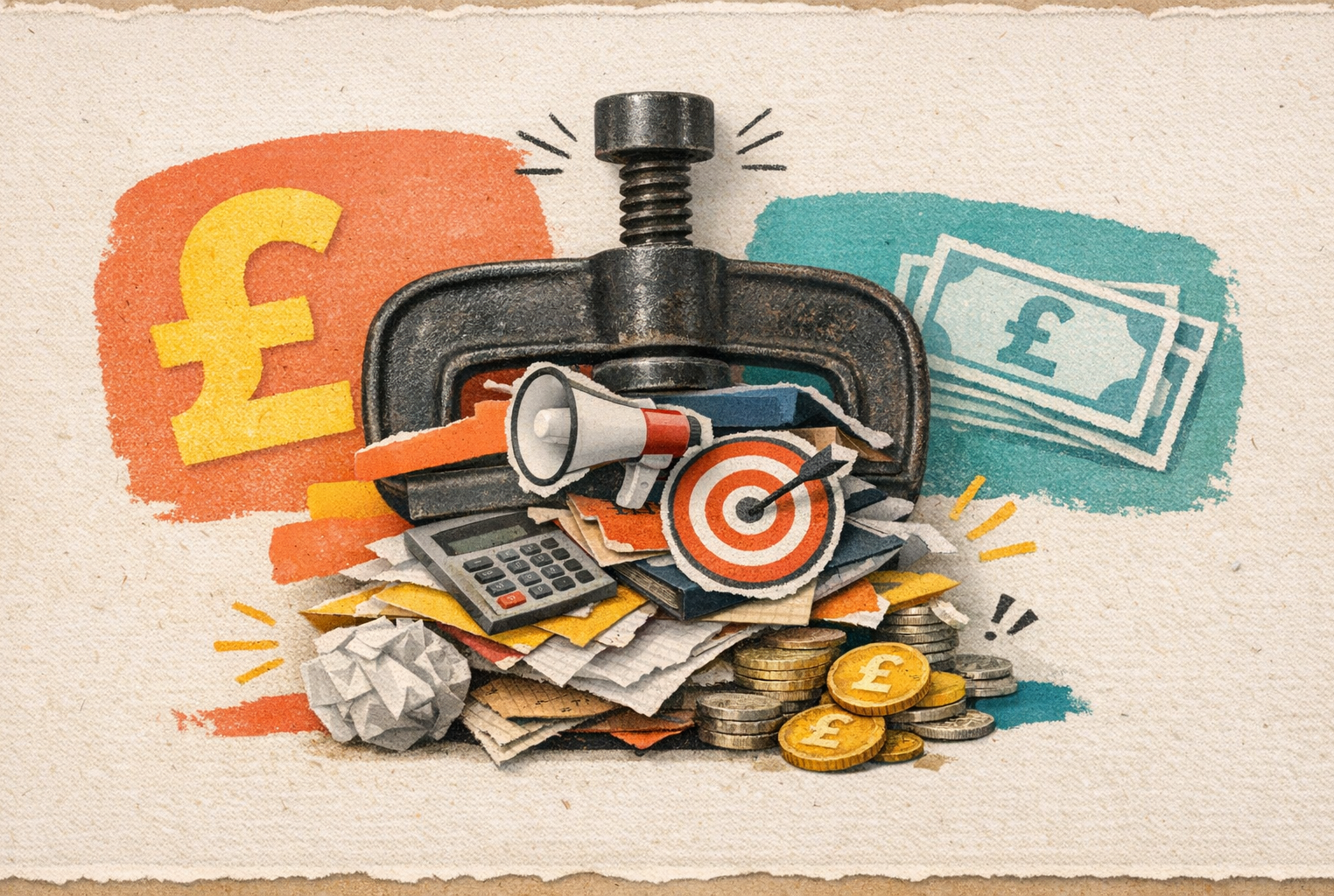
 “Increases in marketing spend can often have the desired short-term impact,” says William Sharp, Account Manager at Door4, “but if you’re not addressing other elements in the equation, this can very quickly become a game of diminishing returns and wasted spend when you hit a ceiling.”
 “If users are landing on your site and not engaging or converting, spending more on media in that scenario won’t get you the result you’re looking for. It just sends more people to an experience that isn’t working as hard as it could. Redirecting even a portion of that budget into understanding why users aren’t converting, and then fixing it, will often deliver far greater returns than the same pound spent on another click.