 “Think about CRO as a business activity, not a website one. Experiment with your offering and positioning, not your UI.”
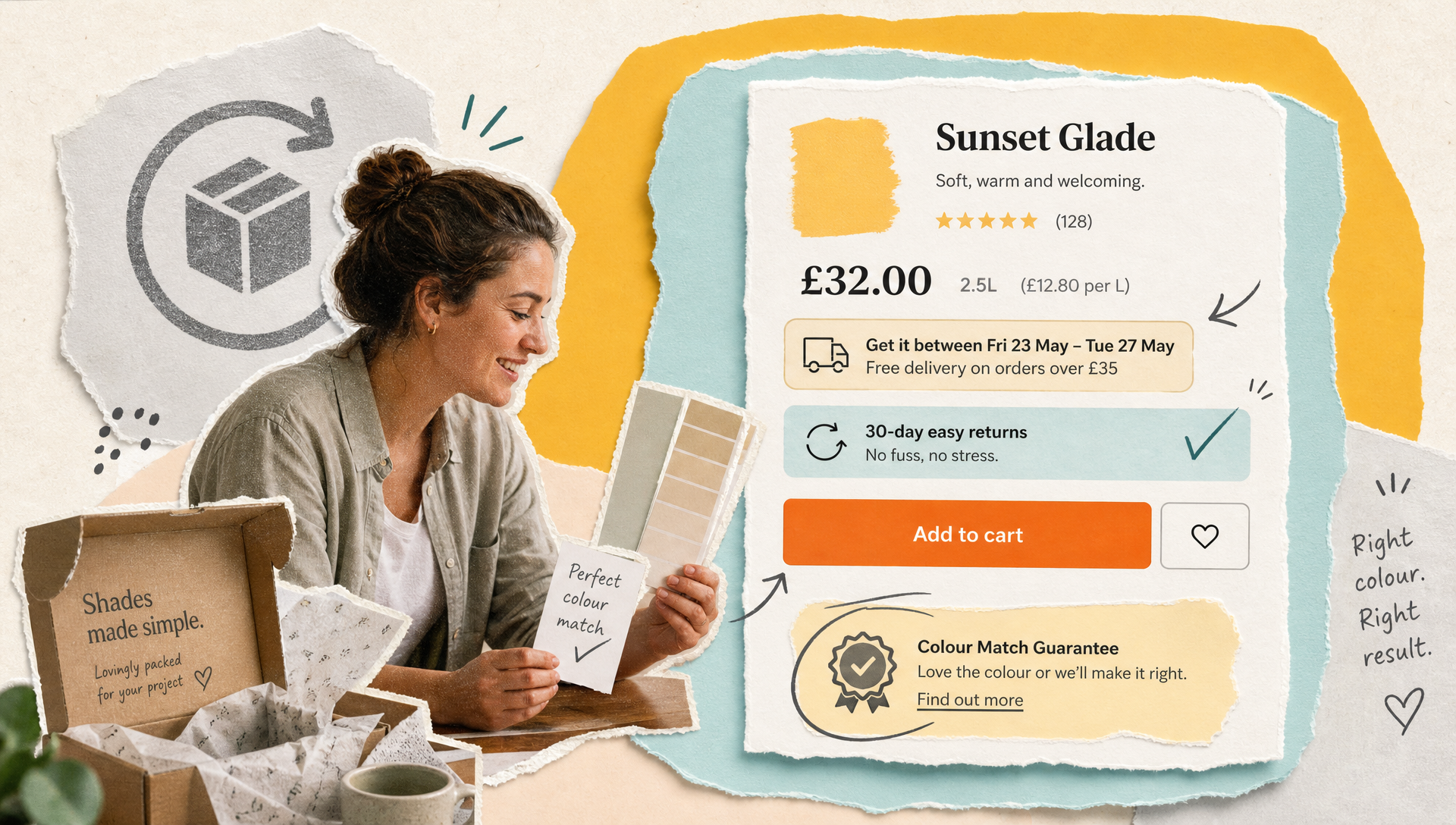
 I think PDPs have the biggest potential when you fix fundamental issues. Users are already there, which means there is some sort of buying intent. We still see too many PDPs without clear images, no product information or way too much product information, delivery information, returns policies or sufficient social proof. Any of these fundamentals could be the difference between an order or a bounce.
 “There is no such thing as best practices in CRO – every brand and its users are unique.”
06.04.2021|
Credibility leads to more traffic, more conversions and more profit for your company. So, what is it - and how can you get some?

Conversion rate optimisation is still the clearest multiplier in e-commerce. Fix the right things, and every paid click, every email, and every product page works harder. We recently spoke to Kevin Robinson, Head of Optimisation at Chillblast, and Thijs Bijl, CRO Analyst here at Door4, and asked them where the real gains are in 2026.
Most CRO programmes focus on layout and flow. The harder problem, and the one that actually moves checkout completion, is trust. Users who reach checkout have already decided they want the product. What stops them is often doubt about the business behind it.
Adding a staffed phone number to checkout, surfacing warranty terms, and being clear about delivery windows. These outperform discount incentives at the moment of abandonment, because they address what users are actually worried about at that point. When Chillblast tested service messaging against last-minute discounts, service messaging won.
Payment choice is a separate but related lever. Enabling native wallets like Apple Pay removes typing on mobile, where forms are the most fragile part of the journey. Stripe data cited by Thijs suggests Apple Pay alone can lift conversion by an average of 20%. Methods like PayPal and Klarna also affect average order value – users can commit to higher-ticket purchases they might otherwise defer.
“Think about CRO as a business activity, not a website one. Experiment with your offering and positioning, not your UI.”
Kevin Robinson, Head of Optimisation, Chillblast
People arrive from short, punchy ads, having spent the last hour scrolling a social feed. The attention available when they land is thin. A hero section that doesn’t immediately state what you offer, why it’s better, and why it’s safe to act will lose a significant proportion of visitors before they reach anything else on the page.
Thijs sees this on roughly 80% of sites he audits. The fix is straightforward: clear value proposition, a single unmissable call to action, and messaging that stays consistent from the ad through to the page. Landing pages should be built per campaign intent, not recycled from the homepage. Keep SEO partners aware of content changes and flag live experiments to anyone whose performance numbers they might affect.
“If you do one thing in 2026, make sure you show visitors what you offer, why it’s better, and why it’s safe to act.”
Thijs Bijl, Analyst, Door4
When prioritising where to focus optimisation effort, product detail pages pay back fastest. The job is not to persuade them to be interested, it’s to remove whatever is making them hesitate.
Thijs Bijl, Analyst, Door4
The mobile dimension matters here specifically. Heatmap data from our client Paintnuts’ upsell page showed most mobile users never realised they were on an upsell page — the relevant content was below the fold. Pulling it up lifted conversion rate by 4% and revenue per user by 6.5%.
This is the thing most CRO content won’t tell you: a test built entirely on established UX principles and behavioural psychology can still lose by 10%. It happens. Every brand’s users are different, and what works elsewhere is a hypothesis until you’ve proven it on your own audience.
That’s not an argument against testing. It’s an argument for prioritising tests properly rather than following instinct or received wisdom. RICE: Reach, Impact, Confidence, Effort – is a useful model because it forces a conversation about how many users will actually see a change and what the realistic revenue contribution is. Without that discipline, roadmaps fill up with ideas that feel compelling and deliver nothing.
Thijs Bijl, Analyst, Door4
Good CRO advice is easy to find. Embedding it as a regular business discipline is harder. A few things that separate teams who compound their gains from those who run occasional tests and wonder why nothing sticks.
Prioritise by profit, not pageviews. Score test ideas against contribution margin and concentrate effort on high-intent journeys first – checkout and key PDPs before category pages or the homepage. Across retail, travel and subscriptions, the pattern is consistent: fixing checkout friction and the post-purchase loop delivers more than polishing pages earlier in the funnel.
Get the measurement foundations right. Define primary and secondary metrics per journey before a test launches, along with the minimum effect size you actually care about. Move to server-side testing where possible to reduce flicker and ad blocker losses. A shared event taxonomy across analytics, ads and BI means everyone is working from the same numbers. Poor consent handling and parallel analytics tags make CRO decisions unreliable, and that’s hard to unwind once it’s embedded.
Build for AI visibility at the same time. AI assistants are already answering shopping questions without sending users to your site, which puts pressure on owned-channel loops, email, SMS, and app, to work harder when users do land. The preparation required for AI visibility is largely the same as good SEO hygiene: structured specs, on-page Q&A, consistent attribute naming, and transparent policies.
Kevin Robinson, Head of Optimisation, Chillblast
Thank you to our contributors for their time and insights.



Our latest articles, features and ramblings.
We explore performance marketing, AI, communications and optimisation.