Crafting a Unified Campaign for Your Home & Garden Brand (Or, How to Stop Your Marketing Channels Fighting Each Other)
You have an SEO agency, a PPC team, and someone looking at conversion rates. None of them are doing a bad job, but none of them are working from the same plan, and that’s causing problems.
PPC bids on keywords SEO already ranks for. CRO tests page layouts that quietly undermine the content your search rankings depend on. Budget leaks in small, unnoticed ways until growth flatlines and nobody can explain why.
This is fixable without starting from scratch. Here’s how.
Home and garden brands feel this harder than most. The consideration cycle for a sofa, a dining table, or a garden set is long. Purchases are style-led, seasonal, and high-value. Customers research obsessively before committing.
Thijs Bijl, Analyst at Door4, puts it plainly:
 “Home and garden customers usually start their journey looking for a specific product. They’ll Google something like ‘6 seater dining tables’, land on a category or product page, and leave. Not because they’re not interested, but because they’ll visit another ten websites to compare style and price.”
That browsing behaviour makes retargeting and on-site experience critical. You lose customers for good when you fail to re-engage them, or when your site gives them no compelling reason to choose you over the nine other tabs they have open.
Seasonality makes coordination more urgent still. Teams that aren’t aligned heading into peak spend will pay twice for the same customer, then deal with the fallout in returns come October.
Start with shared foundations
Before you align tactics, align your data. Run a tracking audit and confirm that the events that matter (product views, swatch requests, delivery checks, add to basket, checkout steps) are visible to SEO, PPC and CRO teams from the same source. If each team is working from a different dashboard, you’ll never get agreement on what’s actually happening.
Clean your product feed. Titles, attributes, pricing and lead times need to match what’s on the site. Inconsistencies here waste paid budget and erode trust with customers when the details don’t match.
Then do one thing that most teams skip: decide together whether you’re primarily capturing existing demand this quarter or creating new demand. The two require different tactics, different creative, and different landing pages. Conflating them is how the budget gets diluted.
SEO: build structure that PPC can use
For home and garden brands, site architecture is a growth lever in its own right. Categories and product listing pages should reflect how customers actually search: by size, material, room, and delivery speed, not how your internal teams organise stock.
Schema markup helps search engines surface answers before a user clicks. Product, FAQ and HowTo schema reduce uncertainty at the point of discovery and carry that trust through to the page itself.
There’s a practical knock-on effect for paid too. If your site structure is disorganised, PPC ends up sending traffic to the wrong pages. A clean taxonomy gives paid media somewhere worth landing.
PPC: coordinate, don’t duplicate
Paid media should fill the gaps that organic can’t cover quickly and amplify what’s already working. It shouldn’t pay for visibility you already own.
Liam Driver at Door4 is direct about the risk:
“The interplay between PPC and SEO is important. Overlap can cost companies a lot of money for conversions that would have been picked up for free by organic.”
That discipline extends to Performance Max. Left unsupervised, these campaigns hand control to algorithms that don’t know your margin structure or your commercial priorities. As Liam notes, “strong barriers” are needed to keep automated campaigns aligned with business goals rather than just optimising for volume.
Practical steps: apply brand exclusions to stop bidding on navigational terms where you already rank. Monitor search term reports weekly. When a category climbs into the top three organically, review whether paid coverage in that area is still earning its keep.
CRO: fix conversion before you chase more traffic
A 10% lift in conversion rate is usually faster and cheaper to achieve than a 10% lift in qualified traffic. CRO multiplies the return on every pound already being spent on SEO and PPC.
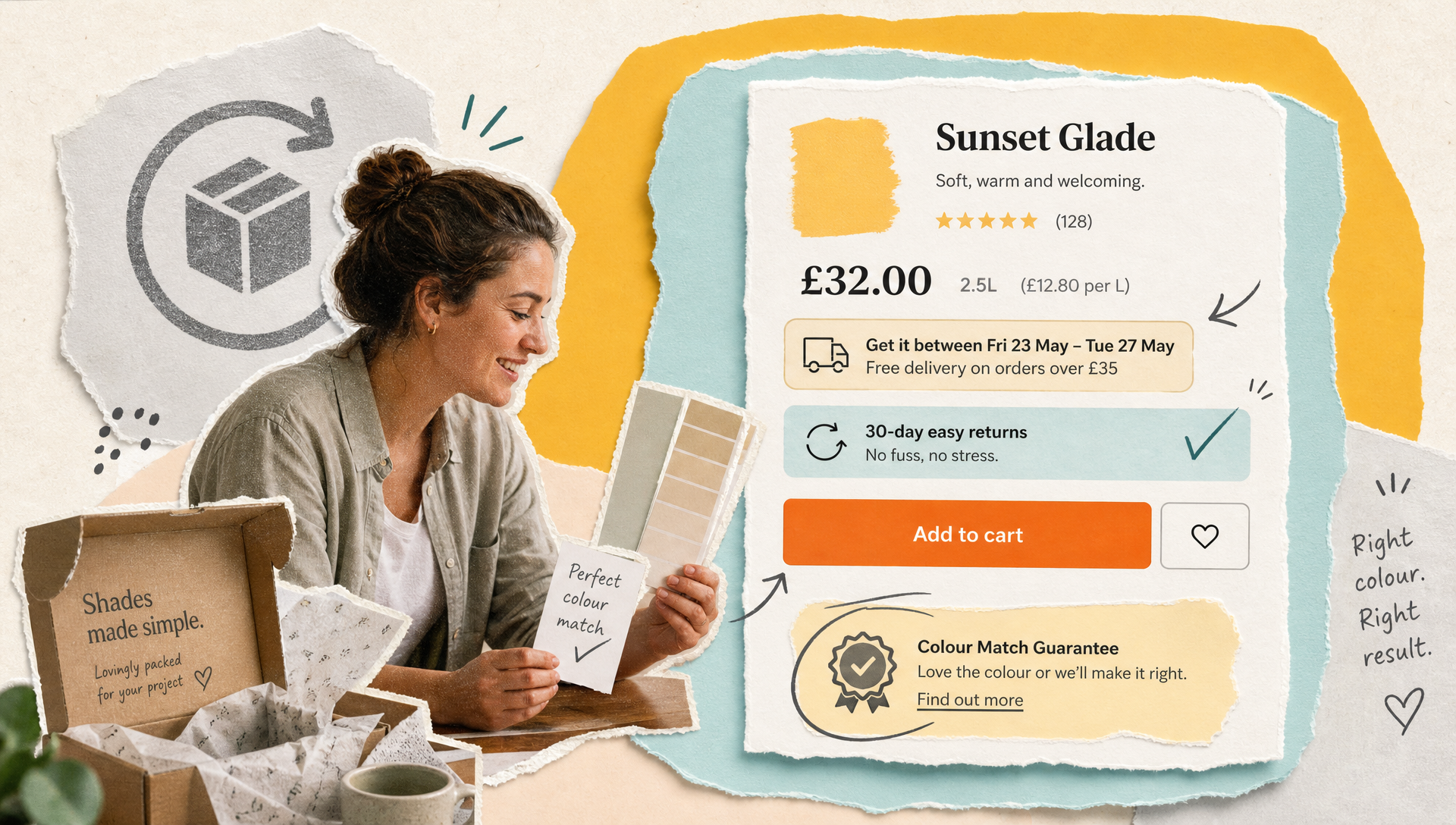
Thijs is clear about where to start: “We still see many product pages with unclear delivery terms, return policies, or a lack of social proof. When you don’t know when your product will arrive or what happens if you don’t like it – especially for high-ticket items – you’ll hesitate. A competitor with clear delivery data, an easy return policy and good reviews will win.”
On the question of which tests move the needle fastest, his answer is deliberately unflashy:
“There isn’t one single test that will always lift conversions. The key is understanding what your users need to know before they purchase. Get delivery terms, returns, product images from every angle and reviews in place. Add a genuine promotion with real scarcity, and you’ll be well on your way. The basics are the same for low and high-ticket items.”
Measurement and governance
Agree the metrics before you argue about tactics. For demand capture: contribution margin, return on ad spend by category, and conversion rate by intent stage. For demand creation: assisted revenue, cost per engaged session, and growth in micro-conversions like swatch requests and showroom bookings.
Run a monthly session with SEO, PPC and CRO in the same room, working from the same data. The decisions that come out of that meeting — shifting budget from categories now ranking to seasonal lines not yet visible, queuing a checkout test when a friction point shows up in the data — are only possible when nobody is optimising their channel in isolation.
The brands that grow consistently tend to have someone responsible for the whole picture, not just their slice of it.
Finally, what to watch in 2026
AI-assisted search is changing how people discover products. Fewer queries will result in a click to your site; more will be answered before they get there. Retail media is pulling budget onto marketplace shelves. Privacy changes are narrowing tracking options.
Liam’s read on AI search is worth paying attention to:
“The technology to replace search engines isn’t there yet for LLMs, but as companies look to monetise AI, search will be one of the most obvious places to start. The profitability of search engine ads will motivate them to build a replacement they can monetise.”
The practical response to all of this is the same: when fewer people reach your site, converting the ones who do becomes more valuable. Better UX, cleaner content, and tighter channel coordination aren’t nice-to-haves in that environment.

 “Home and garden customers usually start their journey looking for a specific product. They’ll Google something like ‘6 seater dining tables’, land on a category or product page, and leave. Not because they’re not interested, but because they’ll visit another ten websites to compare style and price.”
 “The interplay between PPC and SEO is important. Overlap can cost companies a lot of money for conversions that would have been picked up for free by organic.”
 “There isn’t one single test that will always lift conversions. The key is understanding what your users need to know before they purchase. Get delivery terms, returns, product images from every angle and reviews in place. Add a genuine promotion with real scarcity, and you’ll be well on your way. The basics are the same for low and high-ticket items.”
 “The technology to replace search engines isn’t there yet for LLMs, but as companies look to monetise AI, search will be one of the most obvious places to start. The profitability of search engine ads will motivate them to build a replacement they can monetise.”