We’re sorry to say this… But there’s no single test that reliably lifts conversion; every brand, segment and market differs. We don’t have the magic answer for that, but we do have tips for which order to run your tests for the best results.
Get the basics right before anything else
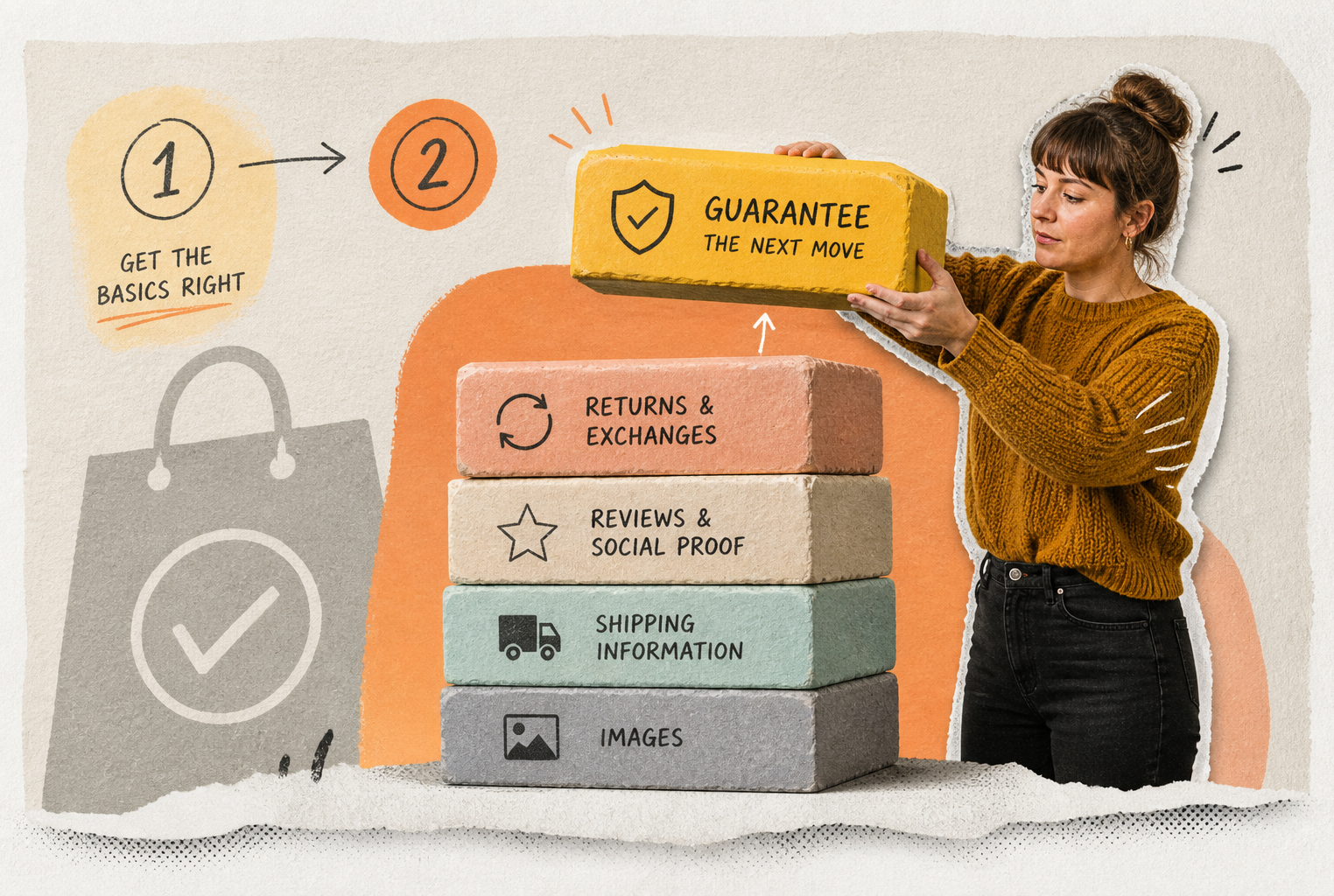
 The basics are the floor a product page stands on. Social proof, a clear returns policy, shipping terms and product images from every angle. Miss any of them, and that gap is the first thing worth testing, because no amount of clever optimisation elsewhere makes up for a page that leaves an obvious question hanging.
The quickest way to find one is simple. Look at your best-selling product page and spot the single question it still forces a shopper to leave and answer somewhere else. That’s your first test.
Returns do a lot of the heavy lifting. Free returns, no questions asked. It removes most of the risk of purchasing, and clearing that doubt deals with the thing that stops most carts before they start.
Once the floor is solid, test a guarantee
With the basics in place, a guarantee is often where the next real level up sits, whether that’s a satisfaction guarantee or something built for the category. Our client PaintNuts is the clearest example I’ve worked on: a colour match guarantee, surfaced across the site, aimed squarely at the fear a customer sits with before buying touch-up paint for their car. It works because it shifts the risk from the buyer to the brand, and shoppers can feel the difference.
In my experience, the detail matters more than the idea. A vague guarantee can reduce trust. A highly specific one, with a link to the terms, can do real work. A promise a shopper can check for themselves beats one they have to take on faith.
The everyday version of the same thinking is delivery microcopy by the button. The “order now, get it between X and Y date” line answers the question a buyer is actually asking in that second. It costs almost nothing to add, and it meets the shopper right when their attention is on the decision.
We’ve found testing in the right order beats testing more of it.
If you want a team that runs CRO this way, that’s the work we take on as a full-service partner.
– Thijs Bijl, CRO Analyst at Door4.

 The basics are the floor a product page stands on. Social proof, a clear returns policy, shipping terms and product images from every angle. Miss any of them, and that gap is the first thing worth testing, because no amount of clever optimisation elsewhere makes up for a page that leaves an obvious question hanging.