
 “We coordinate through 90-day planning across all services to complement each department’s output by addressing the core KPI. This helps plans stay focused but also brings different skills to a problem,”
  “A challenge is that changes in one channel can have a knock-on effect on other channels. For example, SEO might update a page title or content to improve rankings, but that same change can reduce PPC conversion rate if it no longer matches the ad promise or the offer people clicked for,” –
  “AI has helped massively with time-intensive tasks such as reporting, data de-duping and trend spotting. The time saving in reporting has equated to days within a working month, and trend spotting has saved us time to spot trends earlier and capitalise on them when we can. For example, in Google Ads with an account with thousands of keywords it’s quite easy to miss a small uptick that is bumping against a trend, we can then put this through our test and learn programme and implement this into BAU,” – Tom.
 “AI and automation will take a lot of the manual work out of PPC and SEO such as work like bidding, keyword expansion, and reporting, which will allow teams to be able to move faster and operate more efficiently,” – Owen.
18.11.2025|
We look at how brands can use TV to amplify PPC, SEO, and conversion activity. The question isn’t does TV still work? It’s how can it work better alongside digital?

Here’s a look at the people, rituals and tools that turn channel expertise into one joined-up growth engine.
Our activation team brings PPC and SEO specialists into one operating unit, guided by shared plans and a single number that matters most to the client. That structure is deliberate. It prevents channel silos, trims unnecessary handoffs, and makes every tactic serve the same outcome.
“We coordinate through 90-day planning across all services to complement each department’s output by addressing the core KPI. This helps plans stay focused but also brings different skills to a problem,”
says Tom Morton, Head of Activation , Door4.
Titles vary in the team, but responsibilities deliberately overlap. PPC informs SEO on demand signals, language, and profitable audiences. SEO informs PPC on search intent, ranking landscape and content gaps.
The team have core habit that keeps channels pointing in the same direction. “We keep PPC and SEO aligned through sharing important details, such as what’s driving conversions, what people are searching for. This stops us from being pulled in different directions and helps make sure ads and SEO content are aligned,” explains Owen Driver, PPC Executive, Door4.
Planning and optimisation flow continuously. Real-time problems get solved in-channel, then logged so the rest of the team can respond quickly.
Integration creates compounding returns, but it also introduces interdependencies that must be managed with care. Timing is one example. “Some of the biggest challenges evolve around timings. For example, a PPC campaign could start to cannibalise some of the SEO results so careful planning is key here. The same goes for CRO if multiple tests are ongoing at once, this can also affect rankings in the short term. Sometimes you can do too much so we are careful that we address the balance early,” Tom says.
There’s a specific tension we watch for.
Where it pays off
When we’re embedded across a client’s core services, speed and outcomes improve. PaintNuts is a good example of how this model unlocks year-on-year growth. “We do some of our best work when the client is on all our core services. We have case studies for PaintNuts that show growth year-on-year, where if we didn’t have the flexibility to address challenges with the services we likely would not achieve the level of results we have for a number of years now. It allows us to be more agile in our approach and not hampered by what we can do vs what we need to do,” Tom explains.
Embedded teams share roadmaps and success metrics, not just briefs. That reduces the time between signal and decision, which matters when algorithms and competitors move daily. Approvals shorten, experiments compound, and everyone sees the same scoreboard: revenue, margin, lifetime value.
Operational excellence sounds dull. In practice, it’s a culture of small, fast tests backed by tight process. One recent example: Redbridge, our in-house software that speeds SEO content production and keeps tone and structure consistent. “In-house software Redbridge makes our SEO content writing much quicker and more consistent, allowing us to be able to scale output without losing quality so we can get new pages live faster and iterate based on what’s performing,” Owen notes.
Every experiment is small enough to ship this week, instrumented well enough to learn something useful, and important enough to apply across channels if it wins.
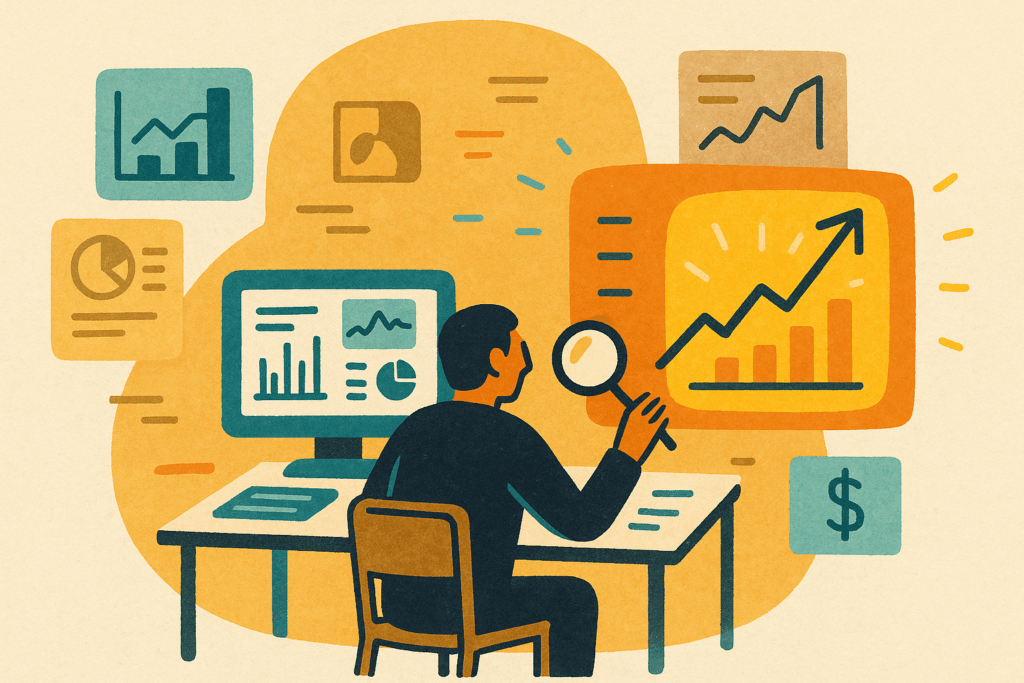
AI has transformed the grunt work, freeing specialists to focus on strategy, creativity and governance.
The same shift shows up across research and content. “AI has allowed for more basic tasks to be completed at a faster pace. Things like research, pulling insights from reports, and writing first drafts of ads or content. It cuts down the time spent on repetitive tasks, which frees up time for us to be able to focus more on optimisation and strategy,” Owen adds.
Both Tom and Owen agree on where the value is shifting. “AI is already changing how PPC and SEO work, but it’s not replacing the fundamentals. It just shifts where the value sits. In PPC, automation handles more of the bidding and targeting, so the edge now comes from strategy, messaging, and creative testing, basically what you feed the system. For SEO, it’s similar: AI speeds up research, optimisation, and content creation, but human intent and relevance still decide what actually ranks and converts. The real skill now is knowing how to guide the automation, not just let it run,” Tom explains.
Looking ahead, the manual work continues to shrink.
Integrated teams beat silos because they share KPIs, rituals and language. Embedding with clients raises agility and accountability on both sides. AI frees time for creativity and judgment, but it still needs strong guardrails. Small, rapid tests deliver faster learning and earlier compounding effects. Cross-channel alignment is the fastest path to maximising ROI.
Contributors
Tom Morton, Head of Activation, Door4
Owen Driver, PPC Executive, Door4



Our latest articles, features and ramblings.
We explore performance marketing, AI, communications and optimisation.